Working Out in the Dark: The Quiet Movement of People Getting Fit Purely for Themselves
For a while there, getting in shape came with an unspoken second job: documenting it. The mirror selfie before the gym. The post-run GPS map that somehow always looked like a cool shape. The transformation photo that took three lighting adjustments and a strategic camera angle to nail. Fitness and performance had become so tangled together that it was hard to tell where one ended and the other began.
But something is changing — quietly, without much fanfare, which is kind of the whole point.
More and more people are choosing to work out without an audience. No stories, no check-ins, no progress pics. Just the work itself. And weirdly, a lot of them say it's the most effective thing they've ever done for their health.
The Problem With Fitness as Content
Let's be honest about what social media did to wellness culture. It didn't ruin it exactly, but it did add a layer of noise that made everything more complicated. Suddenly, your reason for going to the gym wasn't just about feeling better or living longer — it was also about the caption you'd write, the angle you'd film from, and whether your progress was happening fast enough to be worth sharing.
That external pressure is exhausting. And for a lot of people, it quietly became the main pressure. You weren't measuring success by how you felt climbing stairs or keeping up with your kids at the park. You were measuring it in likes, comments, and whether your story got enough views to bother posting the next one.
Fitness psychologists have been talking about this for years: extrinsic motivation — doing something for external reward — is notoriously fragile. It works great in short bursts and collapses the moment the reward disappears or feels insufficient. Which is exactly why so many people crush a six-week challenge and then never set foot in a gym again.
Enter the Anonymous Fitness Era
Somewhere along the way, a countercultural thing started happening. People began opting out — not from fitness itself, but from the performance of it.
Private Facebook groups for local running clubs started outpacing their public counterparts. Reddit communities built around strength training and general health, where profile pictures are optional and nobody's selling anything, have exploded in membership. Apps like Strava added privacy modes. People started keeping workout journals on paper again — actual notebooks, with pens.
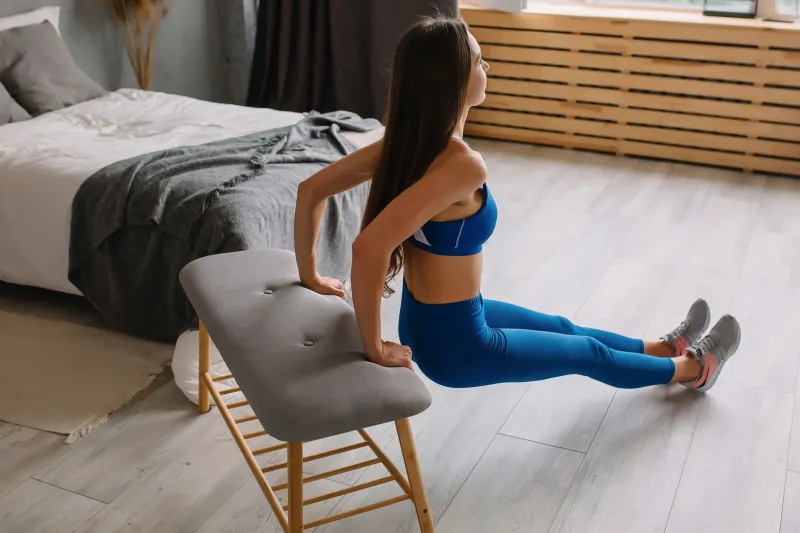
The garage gym industry saw a massive surge during the pandemic and never really cooled down. Part of that was obviously necessity, but a meaningful chunk of people who could afford to go back to a traditional gym just... didn't. They liked working out where nobody could see them. Where there was no mirror angled just right, no one to compare themselves to, no ambient pressure to perform.
Home gym culture used to carry a slightly lonely connotation — like, couldn't get a gym membership? Now it reads differently. Now it reads like a choice.
Rewriting What "Progress" Even Means
Here's where it gets interesting. When you remove the social metrics — the likes, the comments, the comparison scroll — you have to replace them with something else. And what people are replacing them with turns out to be a lot more sustainable.
Things like: Do I sleep better? Do I feel less anxious? Can I carry all the groceries in one trip now? Did I keep up on the hiking trail that wrecked me last summer?
These aren't glamorous benchmarks. They don't photograph well. But they're the kind of progress that actually sticks, because it's connected to your real life rather than an algorithm's appetite for content.
Personal trainers who work with clients outside of social media contexts have noticed this shift too. Clients who come in with internal goals — specific things they want to do or feel rather than look — tend to be more consistent and more resilient when results are slow. They're not waiting for external validation to tell them if they're on the right track. They already know.
Why It Feels Like a Rebellion
There's something almost radical about choosing not to share something in 2025. We live in a culture that has monetized every personal milestone, turned vulnerability into content strategy, and made authenticity into its own kind of performance. Deciding to do something meaningful entirely off the record feels like a quiet act of resistance.
And fitness — something so tied up in bodies, self-image, comparison, and cultural pressure — is one of the most loaded arenas to make that call in.
When someone says "I've been working out for six months and I haven't posted about it once," that sentence carries weight now. It's not sad or secretive. It's increasingly something people say with a kind of calm pride. Like they've figured out something that took a while to learn.
The Deeper Shift Underneath All of It
What's really happening here goes beyond fitness. It's part of a larger cultural renegotiation around what we owe the internet in terms of access to our lives. People are getting more deliberate about what they share and why — and fitness is just one of the more visible places where that negotiation is playing out.
The "revenge body" concept — getting in shape to prove something to an ex, or to the people who doubted you, or to a feed full of strangers — had a good run. It's genuinely motivating in a short-term, spite-fueled kind of way. But spite has a shelf life. At some point you either find a better reason or you stop going.
The people who seem to be finding that better reason are the ones who've stopped asking the internet to validate their effort and started asking themselves a simpler question: does this make my actual life better?
Spoiler: for most of them, it does. And they're not posting about it.
So What Does This Mean for You?
If you've been struggling to stay consistent with fitness, it might be worth asking what your motivation is actually connected to. If the honest answer involves someone else's opinion — an ex, a follower, a comment section — that's not a judgment. It's just useful information.
Trying a month of working out with no documentation, no check-ins, and no sharing might feel uncomfortable at first. But a lot of people who've done it describe the same thing: it starts to feel like something they're doing for themselves in a way that finally feels real.
And that, as it turns out, is the only kind of motivation that tends to show up on the hard days.