Silence Is the New Signal: What Happens When You Finally Mute Your Phone for Good
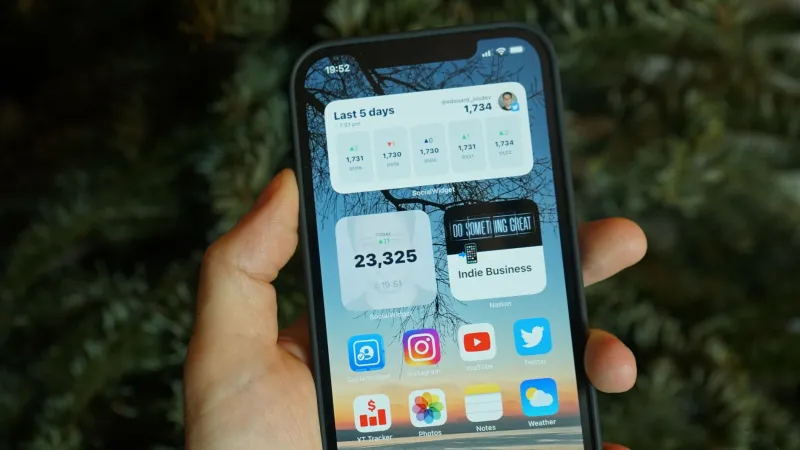
It starts with a single ding. Then another. A badge number creeps up on an app icon like a tiny accusation. Before you've finished your morning coffee, your phone has already told you about a flash sale, a friend's Instagram story, two news alerts, and a calendar reminder for a dentist appointment you scheduled eight months ago. By 9 a.m., your brain has run a small marathon — and you haven't done a single thing you actually planned to do.
For a growing number of people across the US, the solution has become almost radical in its simplicity: turn it all off. Not the phone itself — just the noise. The constant, low-grade drumbeat of push notifications that most of us have quietly accepted as the background music of modern life.
But here's the thing nobody tells you when you finally flip those toggles to "off": it feels less like tidying up your settings and a lot more like breaking up with someone you didn't realize you were dating.
Why Your Brain Got Hooked in the First Place
Notification design isn't accidental. Tech companies have spent years — and billions of dollars — engineering the perfect interruption. The mechanics behind it tap directly into the brain's dopamine system, the same reward circuitry that makes slot machines so hard to walk away from.
Every ping carries a tiny question mark: Is this something good? Something urgent? Something about me? That uncertainty is the hook. Neuroscientists call it variable reward — the idea that unpredictable payoffs are far more compelling than predictable ones. A notification could be a text from your ex, a like on a photo you posted, or a completely irrelevant promotional email. Your brain doesn't know which one it is until you check. So you check. Every time.
Over months and years, that loop becomes automatic. Your hand reaches for your phone before your conscious mind has even registered the buzz. Researchers at the University of California, Irvine found that after a digital interruption, it takes an average of 23 minutes to return to a task with full focus. Multiply that by dozens of daily notifications, and you start to understand why so many people feel chronically scattered without being able to explain why.
The Moment People Finally Snap
For many, the decision to go silent isn't gradual — it's a breaking point.
Take Marcus, a 34-year-old project manager in Austin who described his notification reckoning as happening during a family vacation to the Florida Keys. "I was literally standing on a dock watching a sunset," he said, "and I felt my phone buzz and just... picked it up. It was a coupon from a pizza chain. I'd missed like thirty seconds of the most beautiful thing I'd seen all year for a coupon."
He came home and spent an afternoon going through every app on his phone, disabling alerts. The first few days felt strange. "I kept picking up my phone expecting something to be there," he admitted. "It was like phantom limb syndrome, but for notifications."
That phantom sensation is real, and it's common. The expectation of interruption becomes so ingrained that its absence creates a kind of cognitive dissonance. Your nervous system has been trained to anticipate the buzz, and when it doesn't come, there's a brief, disorienting silence before — for most people — something quieter and more sustainable settles in.
The Unexpected Social Fallout
Going silent isn't purely a personal decision. It has social consequences that most people don't anticipate.
Jamila, a 29-year-old teacher in Chicago, disabled notifications on her messaging apps after feeling overwhelmed during a particularly stressful semester. The relief was immediate. The complications were not. "My friends thought I was ghosting them," she said. "I wasn't checking group chats in real time anymore, so I'd miss plans. People started asking if I was okay."
There's an unspoken contract in American social culture right now: being reachable is being caring. When you opt out of that constant availability, even partially, people can read it as disengagement — or worse, as a statement about them specifically.
Some people solve this by being upfront about it. Marcus started telling friends and coworkers he checks messages at specific times during the day, not continuously. "Once you explain it, most people get it," he said. "Some even say they wish they could do the same thing."
A Practical Guide to Turning Down the Volume
If you're ready to try your own version of the great notification purge, here's a realistic approach — one that doesn't require throwing your phone into a lake.
Start with the obvious offenders. News apps, shopping apps, and social media platforms are almost universally the worst culprits. Disable their notifications first. You will not miss anything that can't wait.
Create an allow-list, not a block-list. Instead of thinking about what to turn off, think about what genuinely needs to reach you in real time. Phone calls from family. Texts from a handful of people. Calendar alerts for actual commitments. Everything else can wait for when you intentionally open an app.
Use scheduled delivery if your phone offers it. Both iPhone and Android now have features that batch notifications and deliver them at specific times — like a morning digest instead of a continuous drip. It's a middle-ground option that works well for people who aren't ready to go fully silent.
Give it two weeks before judging. The first few days of reduced notifications tend to feel uncomfortable. Stick with it. Most people report that by the end of week two, the anxiety around missing something has largely faded.
Communicate your new normal. If you rely on messaging apps for social plans or work coordination, let people know you're checking less frequently. A quick heads-up prevents a lot of unnecessary misunderstandings.
What's Waiting on the Other Side
People who've committed to a quieter phone tend to describe the aftermath in surprisingly emotional terms. Not just "more productive" or "less stressed" — though those come up — but something closer to reclaiming a sense of self.
Jamila put it plainly: "I started noticing things again. Like, actual things in the world around me. I'd be in line at the grocery store and instead of scrolling, I'd just... be there. It sounds so small, but it genuinely felt like something I'd lost and got back."
There's something worth sitting with in that. The notifications were never really about information. They were about staying tethered — to other people, to the feed, to the sense that something important might be happening just outside your field of vision. Letting go of that tether doesn't mean disconnecting. It means choosing, for the first time in a long time, when and how you connect.
And honestly? That choice feels a lot better than any ping ever did.