Hobbies That Lead Nowhere (And That's Exactly the Point)
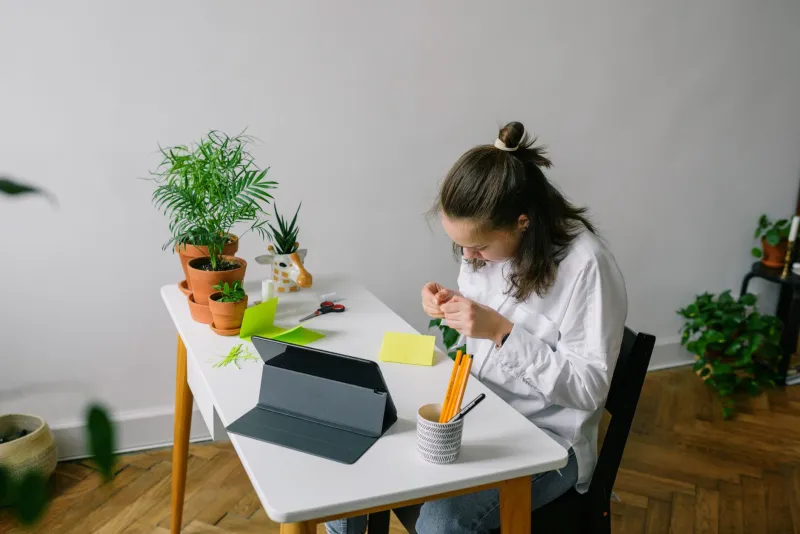
Somewhere between the fifth YouTube tutorial on hand-lettering ampersands and her third failed attempt at a brush stroke, Marcy, a 34-year-old project manager from Columbus, Ohio, had an unexpected realization: she didn't care if she ever got better at this.
"That was the whole point," she says. "Nobody was grading me. There was no deadline. I wasn't going to sell these journals on Etsy. I just... liked doing it."
What Marcy stumbled into has a name now — or at least the internet has given it one. Micro-hobbies. Hyper-specific, low-stakes, stubbornly unproductive little pursuits that exist purely for the joy of existing. And right now, they might be the most quietly radical thing happening in American leisure culture.
The Side Hustle Hangover Is Real
For the better part of a decade, the dominant cultural message around personal interests went something like this: if you're good at something, monetize it. Love baking? Start a cookie business. Into photography? Sell prints. Obsessed with vintage clothes? Open a resale shop.
The hustle-culture machine didn't just encourage people to turn passions into income streams — it made doing so feel like a moral obligation. Sitting around doing something purely for fun started to feel almost irresponsible, like leaving money on the table.
But cracks have been forming in that worldview for a while. Burnout rates have climbed. The pandemic reshuffled everyone's priorities. And a generation of people who tried to monetize their hobbies discovered an uncomfortable truth: the moment you attach a dollar sign to something you love, the love has a funny way of curdling.
Enter the deliberate hobby — one chosen specifically because it goes nowhere.
What Counts as a Micro-Hobby?
The beauty of micro-hobbies is that they tend to be absurdly specific. We're not talking about "I like cooking" or "I run sometimes." We're talking about:
- Vintage lunchbox collecting. Not vintage anything — specifically metal lunchboxes from the '70s and '80s, preferably with intact thermoses.
- Plant propagation. Not gardening, exactly. Just the specific, meditative act of snipping a node, placing it in water, and watching roots slowly appear over weeks.
- Fountain pen inking. Choosing, mixing, and swapping ink colors in fountain pens, sometimes without writing anything particularly important.
- Miniature food sculpting. Tiny polymer clay sushi rolls. Microscopic croissants. No practical application whatsoever.
- Bird journaling. Not competitive birding with life lists and gear — just quietly sketching the birds that show up in your backyard.
None of these hobbies have LinkedIn applications. None of them are scalable. And that, increasingly, is the entire appeal.
The Psychology of Productive Uselessness
There's actually something deeply healthy happening here, according to behavioral researchers who study leisure. When an activity has no measurable outcome, the brain shifts into a different gear. The pressure to perform — to improve, to produce, to justify the time spent — dissolves. What's left is something closer to pure engagement, what psychologist Mihaly Csikszentmihalyi famously called "flow."
The irony is that the most useless hobbies are often the ones that produce the most genuine mental rest. Scrolling social media for an hour feels exhausting. Spending forty-five minutes propagating a pothos cutting feels oddly restorative — even though you've technically "accomplished" nothing but a small jar of roots on a windowsill.
"There's a real psychological cost to always being in output mode," says one occupational therapist interviewed for a recent wellness study. "The brain needs experiences that are intrinsically motivated — things you do because the doing itself feels good, not because of what comes after."
Micro-hobbies, it turns out, are basically therapy that costs $12 and a trip to the craft store.
The Community That Grew Around Going Nowhere
Here's the twist that nobody quite predicted: the deliberately unproductive hobby has spawned some of the internet's most enthusiastic communities.
Subreddits dedicated to plant propagation have hundreds of thousands of members sharing photos of roots that are, objectively, just roots. Vintage lunchbox collectors have Facebook groups where a mint-condition 1977 Star Wars thermos can generate 200 comments of pure enthusiasm. Hand-lettering journals fill entire corners of TikTok with videos that rack up millions of views despite — or because of — the creator explicitly saying they're not trying to teach anyone anything.
The shared understanding seems to be: we are here for the thing itself, not for what the thing becomes. It's a quiet rejection of the idea that every interest needs a destination.
Dave, a 41-year-old IT consultant from Portland, has been collecting vintage National Park patches for three years. He has no plans to sell them, frame them for a shop, or turn them into content. He just likes them.
"People at work ask me what I'm going to do with them," he laughs. "I tell them I'm going to look at them. That's it. That's the whole plan."
What This Actually Says About Us
The micro-hobby wave isn't just about stress relief or pushback against hustle culture, though it's definitely both of those things. It's also a quiet reclamation of identity.
For years, what you did professionally became synonymous with who you were. Your job was your identity, your side hustle was your passion, and your hobbies were either résumé fodder or future businesses. The self became a brand, and brands need to be coherent, marketable, and constantly growing.
Choosing a hobby that doesn't fit that framework is a small act of refusal. It says: some part of me exists outside of my productivity. Some part of me is allowed to just be.
And maybe that's why these tiny, pointless, deeply specific pursuits feel so significant right now. In a culture that has spent years insisting that every minute should count toward something, the radical move is to spend an hour coaxing roots from a cutting in a mason jar — and count it as enough.
Marcy is still doing her hand-lettering, by the way. She's gotten a little better at it, though she'll be the first to tell you that's not really the point.
"I made a really nice ampersand last Tuesday," she says. "I showed my cat. She was unimpressed. It was a great evening."