Your Phone Is Winning the War for Your Brain — Here's How to Fight Back

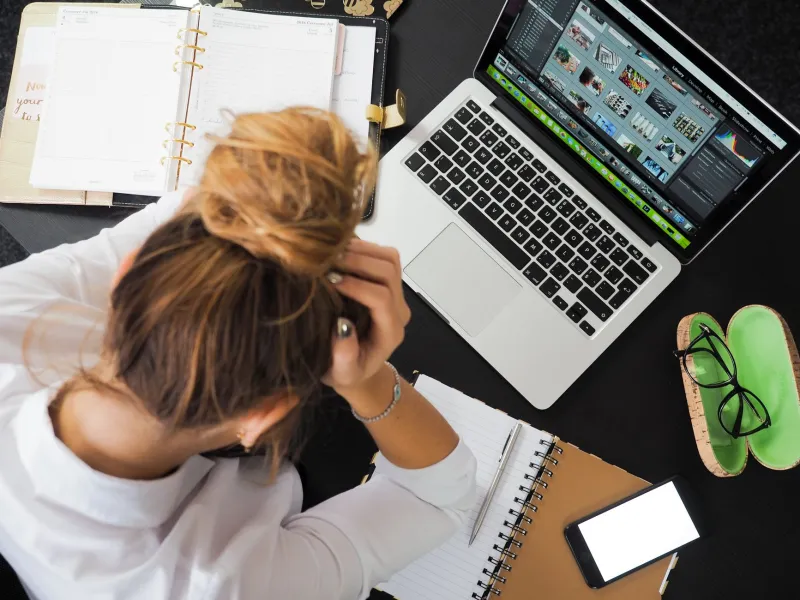
Photo by Photo by Kev Costello on Unsplash on Unsplash
Somewhere between opening TikTok to kill two minutes and suddenly realizing it's been 47 minutes and you're watching a man in Ohio explain the regional history of gas station sushi, something went wrong. Or maybe something went exactly right — depending on whose perspective you're taking.
Because from the platform's point of view, that's a win. A massive one.
The conversation around short-form video and shrinking attention spans has been building for years, but it's hit a new intensity lately. Parents are panicking. Researchers are publishing. Congress is holding hearings. And millions of regular people are quietly noticing that sitting through a two-hour movie feels harder than it used to — or that reading more than three paragraphs requires a kind of focus that used to come naturally.
So what's actually happening inside your brain, and is any of it reversible?
The Machine Behind the Scroll
To understand why this feels so relentless, you have to understand that "addictive" isn't a side effect of these platforms — it's a design specification.
TikTok's recommendation algorithm is widely considered the most sophisticated content-matching system ever deployed at consumer scale. It doesn't just track what you watch. It tracks how long you pause, when you rewatch, when you hesitate before scrolling away. Every micro-behavior feeds a model that gets better at predicting — and then producing — exactly the content that will keep your thumb still for one more second.
Instagram Reels and YouTube Shorts have been racing to replicate that model since TikTok's rise. Even Twitter/X has leaned harder into video and algorithmic feeds over chronological ones. The entire competitive landscape of social media right now is essentially a race to be the most irresistible.
"These systems are optimizing for engagement, not wellbeing," says Dr. Anna Lembke, a Stanford psychiatrist and author of Dopamine Nation, who has spoken extensively about behavioral addiction. "The same dopamine circuits activated by gambling or drugs are being triggered by the variable reward structure of the social media feed."
Variable reward is the key phrase there. You don't know if the next video will be boring or the funniest thing you've ever seen. That uncertainty is, neurologically speaking, crack.
Who's Most at Risk — And Why It's Not Just Teenagers
The cultural conversation tends to focus on Gen Z and younger, and the data does show adolescents are particularly vulnerable — their prefrontal cortexes (the part of the brain that governs impulse control) are still developing. Studies have linked heavy social media use in teenagers to increased anxiety, depression, and disrupted sleep, though researchers are careful to note that correlation isn't always causation.
But adults aren't immune. Far from it.
Researchers at the University of California found that the average American office worker now gets interrupted or switches tasks every three minutes. Attention span studies are notoriously hard to standardize, but anecdotally — and backed by some research — the ability to sustain deep focus is measurably declining across age groups.
Marcus, a 34-year-old graphic designer in Chicago, describes it plainly: "I used to read a book a week. Now I pick one up and my brain is looking for the next thing before I've finished the page. It genuinely scares me."
He's not alone. Threads on Reddit, posts across every platform, and a growing cottage industry of "digital detox" content all point to the same underlying anxiety: people feel like they've lost something, and they're not entirely sure how to get it back.
Which Platforms Are the Worst Offenders?
Not all social media is created equal when it comes to attention hijacking. Here's a rough ranking based on design mechanics and available research:
TikTok sits at the top for pure algorithmic potency and the speed of its content loop. The average video is 15 to 60 seconds, which trains your brain to expect constant novelty at a rapid clip.
Instagram Reels and YouTube Shorts are essentially TikTok clones optimized for platforms with larger existing user bases. The content format is nearly identical in its neurological impact.
Twitter/X operates differently — it's more text-based — but its infinite scroll and algorithmically amplified outrage content creates its own addictive loop, one more tied to anxiety and social validation than pure entertainment.
Facebook is increasingly older-skewing and less video-forward, but its notification system and emotional content amplification are still potent.
Long-form platforms like traditional YouTube (not Shorts) or podcast apps are comparatively less engineered for compulsive use, though they're not neutral either.
Shorter Attention Spans Aren't Inevitable — Here's the Evidence
Here's the part that's actually hopeful: neuroplasticity works both ways. The brain that got rewired by the algorithm can be rewired again by different inputs. Attention is a skill, and skills can be rebuilt.
Digital wellness coach Tristan Harris, co-founder of the Center for Humane Technology, has argued for years that the problem isn't humans — it's the design. "There's nothing wrong with people's capacity for focus," he's said in various interviews. "But you can't win a war against a supercomputer designed specifically to exploit your weaknesses."
The implication is that individual behavior change matters, but so does demanding better design standards from platforms and policymakers.
Actually Useful Strategies for Getting Your Focus Back
If you're ready to recalibrate, here's what the research and practitioners actually recommend — beyond the obvious "just put the phone down" advice that helps no one:
Replace the app, don't just delete it. Cold turkey rarely works long-term. If TikTok is your 11 p.m. habit, replace it with a Kindle app or a podcast. Give your hands and brain something to do.
Use friction as a tool. Log out of apps after every session. Delete them from your home screen. Move them to a folder. Every extra step between you and the content reduces impulsive opens dramatically.
Reclaim boring moments. Stop pulling out your phone in lines, at red lights, in waiting rooms. Those small discomforts are where your brain learns to sit with itself again. It's uncomfortable at first. That's the point.
Schedule your scroll. Give yourself 20 minutes at specific times rather than open-ended browsing. It sounds rigid, but it works.
Do one thing at a time, on purpose. Read for 20 minutes without your phone in the room. Cook without a podcast. Walk without earbuds. These aren't punishments — they're reps for your attention muscle.
The algorithm isn't going anywhere. These platforms have billions of dollars and entire teams of behavioral scientists dedicated to keeping you watching. But knowing that the game is rigged is actually the first step toward playing it on your own terms.
You're not broken. You're just a human being up against a very well-funded machine. And humans, it turns out, are still pretty good at adapting when they decide to.