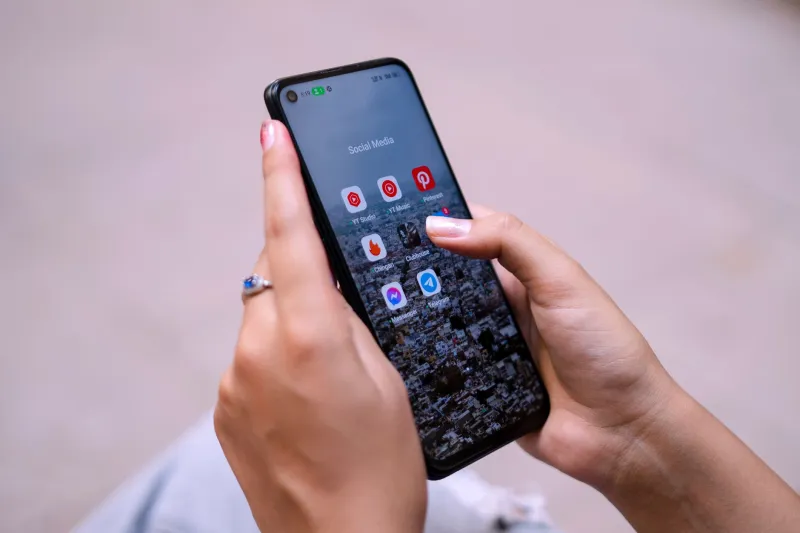
Your Pocket Is Lying to You: The Strange Science Behind Phantom Buzzes and Notification Overload

You're sitting at dinner, mid-conversation, when you feel it — that little buzz against your thigh. You pause, reach down, check your phone. Nothing. No text, no alert, no missed call. Just a blank screen and a vague sense of embarrassment.
Welcome to phantom vibration syndrome. It sounds like something out of a sci-fi movie, but it's a very real psychological phenomenon that researchers have been quietly studying for years. And honestly? The fact that it has a clinical name at this point should tell you everything about how far we've gone down the rabbit hole.
What's Actually Happening in Your Head
Here's the short version: your brain is pattern-obsessed. It's constantly scanning your environment for signals that matter — sounds, sensations, changes in your surroundings. For most of human history, that was a survival feature. Now it's the reason you think your pants are vibrating when they absolutely are not.
Dr. Larry Rosen, a psychology professor and researcher who has spent years studying technology's effect on the brain, has described this as a kind of hypervigilance. When you spend enough time anticipating notifications — and let's be honest, most of us are always anticipating them — your nervous system starts filling in the gaps. It becomes so primed for that familiar buzz that it starts generating the sensation on its own.
Think of it like this: if you listen to a song on repeat long enough, you'll start hearing it even when the music stops. Your brain has basically done that with your phone's vibration pattern.
Research published in Computers in Human Behavior found that upward of 89 percent of undergrads surveyed reported experiencing phantom vibrations. But here's the thing — it's not just college kids. Teachers, doctors, office workers, parents waiting for their kids to text them goodnight — the phenomenon cuts across age groups and professions.
The Anxiety Loop Nobody Warned You About
Phantom buzzes are strange enough on their own, but they're really just a symptom of something bigger: notification anxiety. This is the low-level, background hum of stress that comes from being perpetually on-call in a world that never fully powers down.
Psychologists describe it as a kind of anticipatory stress — your body preparing for a stimulus that may or may not come. Every time your phone could buzz, your cortisol levels tick up just slightly. Multiply that by the dozens of apps competing for your attention, and you've got a nervous system that's running a low-grade emergency drill basically all day.
"We've essentially trained ourselves to treat every notification as potentially urgent," says one cognitive behavioral therapist based in Chicago who works with clients experiencing technology-related stress. "The brain doesn't naturally distinguish between a text from your mom and an alert that your building is on fire. It just knows something wants your attention."
That's a problem, because not everything wants your attention for a good reason. A flash sale at a store you visited once. A push notification from an app you forgot you downloaded. A reminder to rate your experience somewhere. All of it hits the same neurological alarm system.
The Rewiring No One Signed Up For
What makes this particularly uncomfortable to sit with is that the change isn't temporary. Repeated exposure to digital interruptions doesn't just affect how you feel in the moment — it reshapes the brain's baseline expectations over time.
Neuroplasticity, the brain's ability to reorganize itself based on experience, is usually framed as a good thing. And it is. But it works both ways. The same mechanism that lets you learn a new skill or recover from an injury also allows years of constant pinging to fundamentally alter how your brain processes attention, reward, and threat.
Researchers at the University of California, Irvine, have found that it takes an average of about 23 minutes to fully regain focus after an interruption. And that's assuming the interruption is real. Phantom buzzes — the ones that don't even have a notification attached — can trigger the same mental derailment. You check your phone, find nothing, feel a weird mix of relief and disappointment, and then try to remember what you were doing before.
Over time, this chips away at something pretty essential: your capacity for deep, sustained focus. The kind of focus that lets you actually finish reading a book, or sit with a complicated feeling, or do the kind of creative thinking that requires your brain to wander without being yanked back by a buzz that may not even exist.
So What Do You Actually Do About It?
The good news — and yes, there is some — is that the brain's plasticity works in your favor here too. The habits that created this hypersensitivity can, with deliberate effort, be gradually unwound.
A few things mental health professionals and researchers consistently point to:
Batch your notifications. Instead of letting every app interrupt you in real time, designate specific windows — maybe twice in the morning and once in the afternoon — where you actually check in. It sounds rigid, but it retrains your nervous system to stop anticipating constant input.
Put the phone in a different room. Not just face-down on the table. A different room. Studies have shown that even the presence of a smartphone on a desk reduces cognitive capacity, even when the phone isn't being used and isn't making any noise.
Audit your apps. How many of your installed apps actually need to send you push notifications? Be honest. For most people, the answer is two or three, max. The rest is noise that your brain has been working overtime to process.
Name the anxiety. This sounds a little therapy-speak-y, but it works. When you reach for your phone out of reflex and find nothing there, just noticing that — oh, that's the phantom buzz thing — can create a little psychological distance between you and the compulsion.
The Bigger Picture
Phantom vibration syndrome is, in a weird way, a very 21st-century metaphor. We've built systems that are so good at demanding our attention that our bodies have started demanding it on their behalf, even when there's nothing there.
It's not a crisis, exactly. But it is a signal — maybe the most honest one our nervous systems know how to send — that something in the way we've set up our digital lives isn't quite working. The buzz you're feeling might not be real. But the stress underneath it absolutely is.
Your phone will survive a few hours of silence. The question is whether you've gotten to the point where you actually believe that.