Logged Off for Good: The Influencers Who Walked Away and Never Looked Back
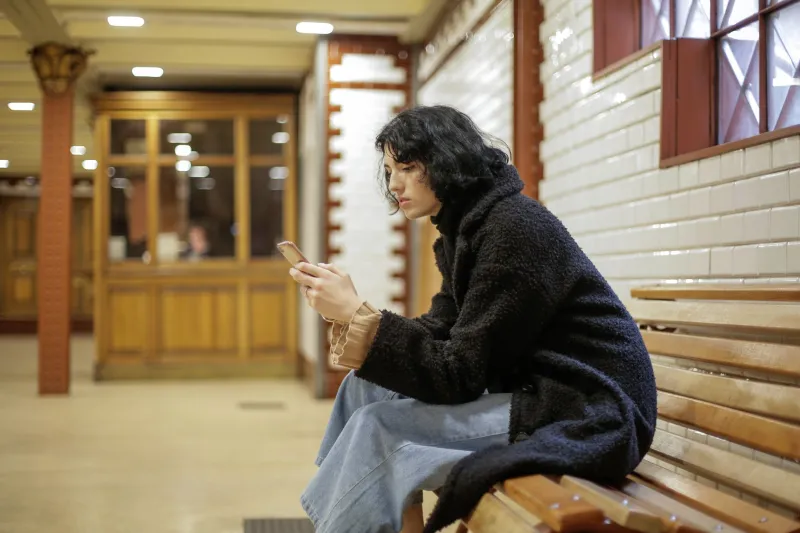
One day they're posting twice a day, flooding your feed with hauls, hot takes, and morning routines. Then — nothing. No farewell video. No cryptic story. Just silence. If you've noticed some of your go-to creators suddenly going ghost, you're not imagining it. A very real, very widespread exodus is happening across Instagram, TikTok, and YouTube, and it's shaking up the entire ecosystem of influence-based careers.
This isn't your typical "I'm taking a little break" announcement followed by a triumphant return two weeks later. We're talking about full stops. Extended disappearances. Some creators are stepping back for months. Others aren't coming back at all.
So what's actually going on?
The Machine Never Sleeps — But People Do
Here's the thing nobody really talks about when they romanticize the influencer lifestyle: the content never stops needing to be made. Algorithms reward consistency with a ruthlessness that would make a corporate overlord blush. Miss a few days? Your reach tanks. Post something that doesn't hit? The platform buries you. It's a treadmill with no off switch.
For years, creators played the game because the rewards were real — brand deals, sponsorships, a genuine community of followers who felt like friends. But somewhere along the way, the job description quietly changed. It stopped being about sharing cool stuff and started being about feeding a machine that was never satisfied.
Burnout, which was once whispered about in creator circles, is now being spoken about openly. Creators across every niche — beauty, fitness, gaming, parenting — are describing the same spiral: exhaustion that doesn't go away with sleep, a creeping resentment toward the camera, and the bizarre feeling of being both famous and completely invisible.
When the Algorithm Becomes the Enemy
Talk to any mid-level creator right now and you'll hear a familiar frustration. The platforms keep changing the rules. What worked six months ago is dead today. Short-form video ate long-form. Carousels replaced single images. Live streams replaced carousels. The goalposts never stop moving, and chasing them is a full-time job that pays inconsistently at best.
For creators who built audiences over years, watching their reach crater because they refused to pivot to the latest format feels deeply demoralizing. One lifestyle blogger with half a million Instagram followers described it bluntly in a now-viral thread: "I spent four years building something and the platform decided overnight it didn't matter anymore. Why would I keep grinding for something that doesn't even belong to me?"
That sense of ownership — or lack of it — is a huge part of what's driving people away. Your audience technically lives on someone else's platform. Your income depends on someone else's algorithm. Your relevance is decided by someone else's engineers in a meeting you'll never be invited to.
The Performance Tax
There's also a psychological cost that doesn't get enough airtime. Influencing, at its core, requires you to perform your life constantly. Happy moments, sad moments, mundane Tuesday afternoons — everything becomes potential content. And when you're always performing, it gets harder and harder to know where the performance ends and you begin.
Several creators who've stepped back have described a kind of identity erosion. You start curating your real experiences through the lens of how they'll play online before they've even finished happening. You're at your kid's birthday party mentally scripting the caption. You're on a hike calculating the lighting. It's exhausting in a way that's hard to explain to people who haven't lived it.
The pressure to be relatable while also being aspirational, to be vulnerable without being pitiful, to be consistent without being boring — it's an impossible tightrope. And a lot of creators have simply decided they're done walking it.
What Happens to the Followers Left Behind?
For audiences, the sudden silence of a creator they've followed for years can feel weirdly personal. These aren't celebrities you admire from a distance — these are people who talked to you through your headphones on your commute, whose opinions you trusted on everything from skincare to political news. When they vanish, it leaves a gap that feels oddly intimate.
Some followers get it. Comment sections on "I'm taking a break" videos are often full of genuine support, people saying they understand, urging creators to prioritize their health. But there's also a quieter, less charitable reaction: the sense of betrayal. The feeling of being abandoned by someone who built a career on being there.
It raises a real question about what the creator-audience relationship actually is. Is it a media relationship, like between a TV show and its viewers? Or is it something more personal, more mutual? The answer probably depends on who you ask — and that ambiguity is part of what makes the whole thing so complicated.
Is This the End of the Influencer Era?
Not exactly. But it might be the end of influencing as we've known it — the always-on, post-or-perish model that defined the 2010s and early 2020s. What's emerging in its place looks a little different.
Some creators are migrating to platforms that feel less punishing — newsletters, Substack, Patreon, Discord servers where they can engage with smaller, more dedicated communities without the pressure of algorithmic performance. Others are scaling back dramatically, posting when they feel like it instead of when the schedule demands it.
A few are simply leaving and finding that life on the other side of the camera is, surprisingly, fine. Maybe better than fine.
The influencer economy isn't collapsing. Brands still need human faces to sell things, and audiences still want creators they can connect with. But the terms of that deal are being renegotiated in real time, and the creators doing the renegotiating are the ones who finally decided their mental health was worth more than their engagement rate.
Honestly? Good for them.


